






37views

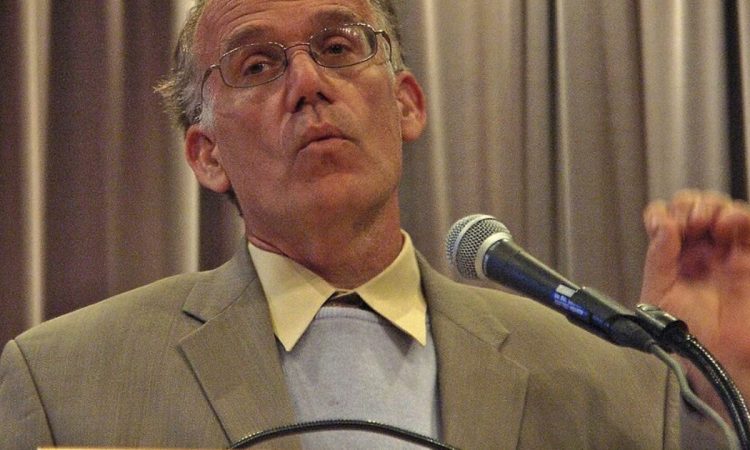
Victor Davis Hanson has spent decades building a career that is difficult to place into a single category. He is a historian, classicist, author, educator, farmer, and public commentator whose work has reached audiences far beyond traditional university classrooms. His books on warfare and history, along with years of essays and commentary, have made him a widely recognized American public intellectual.
That long career has also created curiosity about Victor Davis Hanson net worth, particularly among readers who know him through his books, lectures, interviews, and media appearances. Unlike many entertainers and business figures, however, Hanson does not have publicly disclosed financial statements that establish his personal wealth. Rather than relying on unsupported figures circulated online, it is more useful to look at the documented career that has provided his professional income over the years.
His story begins not in a television studio or major publishing office, but on a California farm.
Who Is Victor Davis Hanson?
Victor Davis Hanson is an American classicist, military historian, author, educator, and commentator.
He is the Martin and Illie Anderson Senior Fellow at the Hoover Institution, where his work focuses particularly on classics and military history. Over his career, he has written extensively about ancient Greece, warfare, agriculture, military strategy, American society, and contemporary political and cultural issues.
Hanson has also held academic or visiting positions connected with institutions including Stanford University, the U.S. Naval Academy, Hillsdale College, and Pepperdine University.
What makes his background particularly interesting is the combination of academic scholarship and practical farming experience. Agriculture was not simply a subject Hanson encountered in historical texts. It was part of his own upbringing and working life, and that experience influenced some of his early academic research.
Early Life and Background
Victor Davis Hanson was born in California in 1953 and grew up on a farm near Selma in California’s Central Valley.
Farming played a significant role in his early life. He came from a family familiar with both agriculture and public service, and the demanding environment of farm work would later influence the way he approached historical questions.
This background became particularly relevant when Hanson studied agriculture and warfare in ancient Greece.
Earlier scholarship had examined how invading armies could damage agricultural land during ancient conflicts. Hanson brought a practical farmer’s perspective to the question. He understood firsthand how difficult and time-consuming it could be to destroy established vineyards, orchards, and other agricultural resources.
That combination of physical farming experience and formal classical education eventually became an important feature of his historical scholarship.
Rather than separating his agricultural background from his intellectual career, Hanson frequently connected the two.
Victor Davis Hanson’s Age and Birthday
Victor Davis Hanson was born on September 5, 1953.
He turned 73 years old in September 2026.
His professional career has therefore stretched across several decades, beginning with his classical education in the 1970s and continuing through teaching, historical scholarship, publishing, journalism, lectures, and institutional research.
The length of that career is significant when considering his public reputation. Hanson did not become known because of one book or a brief period of media attention. His profile developed gradually through years of scholarship and writing.
Education
Hanson’s formal academic training is centered on classical studies.
He earned his Bachelor of Arts degree in classics from the University of California, Santa Cruz in 1975.
He later studied at the American School of Classical Studies in Athens, giving him the opportunity to continue his classical education in Greece.
Hanson subsequently attended Stanford University and completed a PhD in classics in 1980.
This education provided the scholarly foundation for much of his later work. Ancient Greece, military history, warfare, agriculture, political organization, and the development of Western institutions became recurring subjects throughout his career.
His academic training, however, was only one part of his intellectual development. His agricultural experience gave him a practical perspective that was less common among professional classicists.
From Farming to an Academic Career
After earning his doctorate, Hanson did not immediately settle into a conventional academic career.
He returned to farming in California.
During this period, he continued thinking and writing about classical history while dealing with the practical realities of agriculture. His doctoral research eventually contributed to Warfare and Agriculture in Classical Greece, an important early work examining the relationship between military campaigns and farming in ancient Greece.
Economic pressures in California agriculture eventually contributed to a major professional change.
Hanson began teaching at California State University, Fresno, where he developed a long academic career. He became known as an educator as well as a scholar and author.
His teaching was formally recognized in 1991 when he received an Excellence in Teaching Award from the American Philological Association.
That recognition was followed by opportunities at several prominent institutions.
Academic Positions and Professional Work
Hanson’s career expanded considerably beyond California State University, Fresno.
He served as a visiting professor of classics at Stanford University during 1991–92. He was also a National Endowment for the Humanities fellow at the Center for Advanced Study in the Behavioral Sciences in Stanford, California, during 1992–93.
His other academic appointments have included work associated with the United States Naval Academy, Hillsdale College, and Pepperdine University.
Today, one of his most prominent institutional roles is with the Hoover Institution at Stanford University, where he serves as the Martin and Illie Anderson Senior Fellow.
His Hoover work focuses heavily on classics and military history, subjects that have remained central throughout his professional life.
At the same time, Hanson gradually became known to audiences outside academia.
Books, newspaper columns, essays, interviews, lectures, and other forms of commentary significantly broadened his readership.
Career as an Author
Writing has been one of the most important parts of Hanson’s career.
His bibliography covers several fields, but warfare and military history are especially prominent.
Among his notable books are The Western Way of War, The Other Greeks, The Soul of Battle, Carnage and Culture, Ripples of Battle, A War Like No Other, The Father of Us All, The Savior Generals, and The Second World Wars.
He has also written about agriculture and rural California. Books such as Fields Without Dreams and The Land Was Everything reflect the agricultural side of his background.
This range helps explain why Hanson’s readership extends beyond specialists in ancient history.
Some readers encounter him through books about Greece. Others discover his work through military history, agriculture, American culture, newspaper commentary, podcasts, interviews, or contemporary political writing.
According to his Hoover Institution biography, Hanson has written or edited more than twenty books in addition to hundreds of articles, reviews, editorials, and essays.
Rise to Wider Recognition
Hanson was already an established scholar before he became widely recognizable outside academic circles.
A major point in his broader public career came through books dealing with warfare.
Carnage and Culture, published in 2001, examined military conflicts across different historical periods and became one of his best-known works.
His expertise in military history subsequently brought increased attention to his commentary on warfare and international affairs.
This transition illustrates an important aspect of his career: Hanson moved from being primarily a classics professor and historian toward becoming a public commentator whose work crossed academic and popular audiences.
He continued publishing scholarly and historical material while also writing about current events and contemporary American society.
Major Awards and Achievements
Hanson has received several significant honors during his career.
In 1991, he received the American Philological Association’s Excellence in Teaching Award.
In 2002, he received the Eric Breindel Award for Excellence in Opinion Journalism.
One of his most notable honors came in 2007, when he received the National Humanities Medal.
The National Humanities Medal recognizes individuals and organizations that have contributed significantly to Americans’ understanding and engagement with the humanities.
Hanson was recognized for his contributions to historical scholarship and his work connecting the study of past civilizations with contemporary understanding.
He received the Bradley Prize the following year, in 2008.
These awards demonstrate that his professional reputation has developed across multiple fields rather than through book sales or media work alone.
Victor Davis Hanson Net Worth and Income
There is no authoritative public financial disclosure that establishes Hanson’s exact personal net worth.
Various celebrity-finance websites may publish estimates, but figures without supporting financial records should not be presented as established facts. Hanson has not publicly disclosed a comprehensive statement of his assets, liabilities, investments, property values, royalties, and other financial holdings that would allow an exact calculation.
What can be discussed more reliably are his potential professional income sources.
His long career has included university teaching and academic appointments, institutional research positions, book publishing, journalism and columns, speaking and lectures, and other media-related work.
Book royalties may also form part of an author’s income, particularly when that author has published numerous titles over several decades. However, publishing contracts and royalty payments are generally private, so Hanson’s total earnings from his books cannot be accurately calculated from publicly available information.
His position at the Hoover Institution represents another established part of his professional career, but this should not be used to speculate about his total personal wealth.
For these reasons, any precise dollar figure attached to his fortune should be treated as an estimate unless supported by credible financial documentation.
Personal Life and Family
Hanson has generally built his public reputation around scholarship, history, farming, books, and commentary rather than celebrity-style coverage of his private life.
He grew up in a family with deep connections to California’s Central Valley.
His agricultural roots have remained a recognizable part of his public biography. Farming is particularly important because it directly influenced the perspective he brought to his research into ancient agricultural societies.
Although information about some aspects of his family life has appeared publicly over the years, there is no reason to speculate about private matters that Hanson has not made part of his public professional record.
His career provides more than enough material for understanding why he became a notable public figure.
Why His Farming Background Matters
One of the most distinctive facts about Hanson is that farming was not simply something he did before becoming a historian.
It influenced the historian he became.
When studying descriptions of agricultural destruction during ancient warfare, Hanson could compare historical arguments with his own experience of the physical labor required to destroy crops and established agricultural land.
That practical knowledge helped shape questions he asked about ancient warfare.
It is an unusual combination.
Many scholars approach ancient agriculture primarily through written records, archaeology, and historical analysis. Hanson could combine those sources with personal experience of working agricultural land.
That connection between practical experience and historical research helped distinguish his early scholarship.
Interesting Facts About Victor Davis Hanson
Hanson’s career contains several details that may surprise readers who primarily know him from modern political commentary.
He began his professional life deeply immersed in classical studies rather than contemporary politics.
He holds a doctorate in classics from Stanford University.
He also spent significant time farming after completing his doctoral education.
His academic work has covered subjects ranging from ancient Greek agriculture to major conflicts in modern military history.
Hanson has taught or held academic positions connected with several well-known American institutions, including Stanford and the U.S. Naval Academy.
He received the National Humanities Medal in 2007.
His work includes not only books but hundreds of essays, articles, editorials, and reviews.
Most importantly, his career illustrates how a specialist in ancient Greek history can eventually develop an audience extending far beyond the traditional boundaries of classical scholarship.
FAQs
What is Victor Davis Hanson famous for?
Victor Davis Hanson is best known as a classicist, military historian, author, educator, and public commentator. His books and essays cover ancient Greece, warfare, military history, agriculture, American culture, and contemporary affairs.
How old is Victor Davis Hanson?
Victor Davis Hanson was born on September 5, 1953. He turned 73 in September 2026.
What is Victor Davis Hanson’s exact net worth?
His exact personal wealth has not been reliably disclosed through authoritative financial records. Online estimates should therefore not be treated as confirmed figures. His documented professional career includes academic work, publishing, institutional positions, journalism, lectures, and media activities.
Where did Victor Davis Hanson study?
Hanson earned a BA in classics from the University of California, Santa Cruz in 1975 and a PhD in classics from Stanford University in 1980. He also studied at the American School of Classical Studies in Athens.
What does Victor Davis Hanson do now?
He is the Martin and Illie Anderson Senior Fellow at the Hoover Institution, where his areas of expertise include history, military affairs, international conflict, and military strategy.
Conclusion
Victor Davis Hanson’s life and career combine several experiences rarely found in one professional biography. He grew up around California agriculture, became a farmer himself, earned advanced academic training in classics, taught university students, published extensively on ancient and modern warfare, and eventually became a widely recognized author and commentator.
His professional history is well documented, but his personal finances are not. That distinction matters when discussing wealth. Instead of presenting an unsupported dollar amount as fact, the available evidence shows that Hanson has built multiple professional income streams during a career spanning several decades.
Whatever his exact financial position may be, his public reputation rests primarily on his books, historical scholarship, teaching, institutional work, and commentary.
for more information click here


Who Is Magali Brunelle Keeso? Career, Husband & Life
Magali Brunelle Keeso is a Canadian lawyer best known publicly as the wife of Jared Keeso, the actor, writer and...

Who Is Ashen Josan Page? Jimmy Page’s Son, Age, Family, and Personal Life
Being the child of a world-famous musician can bring attention even without stepping onto a stage. Ashen Josan Page is...
